The third person who rings to ask where to leave the car has given you a useful clue. Before rewriting the whole guest portal, spend a few shifts working out when the question comes up and what information guests had at that point.
On this page
Make the log easy to keep beside the phone
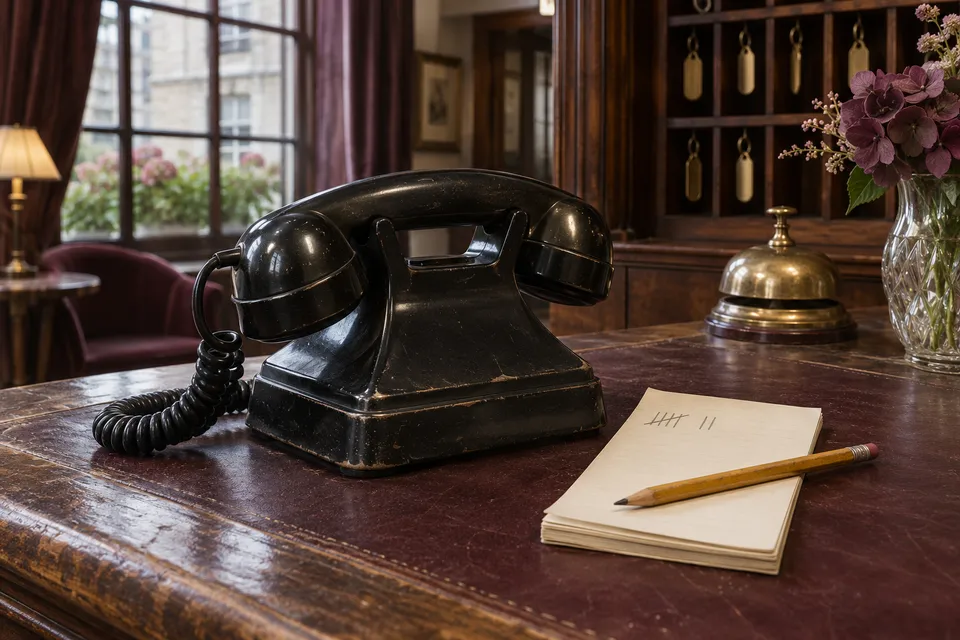
Pick one arrival window and one quieter shift you can cover twice. Rule four columns for parking, breakfast, checkout and everything else. Add a separate column for a request that needs a person, such as unlocking the car park. Skip room numbers, guest names and phone numbers.
At handover, write the number of arrivals during each window. If you included calls from people already staying at the hotel, tally those separately. A night with a group arrival creates a different desk workload from a quiet Tuesday.
Put the answer where the decision happens
Imagine you log eleven parking questions, eight from guests who ring from the barrier. That points to the route in, where they can still act on it. Try adding the exact entrance and what to do at the barrier to the arrival message. A better map inside the room comes too late for those eight calls.
If the questions are about a visitor pass or whether a bay is accessible, keep the number for a person who can help. The tally tells you which information is missing and which situations still need the desk.
Count the same window again
Try the revised message on another comparable shift. Record the answer you changed, which channel carried it and whether it was sent on time. Compare parking questions per 10 arrivals as well as raw counts. When one night has very few arrivals, keep collecting before drawing a conclusion.
Keep the sheet somewhere the next shift sees it. If a receptionist has to sign in to add a single mark, the busiest calls are the ones you will miss.
Agree what counts as a repeat question
Split “Where is the car park?” from “The barrier won’t open.” The first might be solved by better directions. The second needs someone to open it or explain a different route. Use the same definitions across shifts. When a conversation covers two topics, agree whether you will count the main reason for contact or record both with a note. Use that choice both before and after the change.
A simple tally works if the person answering can make a mark in two seconds. Record phone, desk and message contacts in separate columns. You may want fewer calls but still welcome questions at the bar or at check-in. If you count calls only, you can miss the same question moving to another channel, which gives a very different picture of the desk’s workload.
Keep the counts beside the arrivals
The table is a worked example of a parking message test. Each shift covers the same arrival hours, and the numerator is the number of parking calls from guests who have not yet arrived. The denominator is arrivals in that same window. Calls from people who are already staying go in a separate tally. For an arrival-focused change, mixing the two populations makes the rate hard to interpret.
To calculate the rate, multiply those calls by ten and divide by arrivals. If nobody arrives during the window, keep the raw count and leave the rate blank. A night with two late arrivals is also worth keeping visible on its own while you gather a few more comparable shifts.
| Window | Calls | Arrivals | Calls per 10 |
|---|---|---|---|
| Before directions were revised | 8 | 20 | 4.0 |
| After directions were revised | 6 | 30 | 2.0 |
This is a reason to keep testing the wording. The sample does not establish that the message caused the change.
Check that the rewritten answer got to the guest
Choose one answer to change first. If the parking diagram and the welcome email both change at the same time, it becomes harder to tell which one helped. Ask a colleague to follow the instructions from the road on their phone without the benefit of knowing the property. Check the sender and delivery window for both direct and third-party bookings you expect to reach.
Keep the old and new wordings and the date the desk switched over. If the revised message is only sent to direct bookings, record that. A guest who never received the instructions is a separate issue from a guest who read them and still could not find the right entrance.
Decide what belongs in a self-service answer
If the reduction is steady and colleagues can repeat the result, put the same wording in the places where guests ask the question. Check every language of the sign, directory and message. If the calls still come in, ask one or two guests where they looked first and what was missing. Record the reason rather than the guest’s details.
Some issues still belong with a person. Late arrival, an access problem or a change requested for a particular booking may need a decision the directory cannot make. Keep that route visible. The tally saves effort when it separates a missing instruction from a genuine service request.
Leave the next reader a note about what was missed
The desk will occasionally have to stop tallying to deal with the queue. Give the log a way to mark an incomplete period. Write “no tally 18:15–18:40” rather than entering a zero. If two staff members split the phone and desk contacts, make sure both know where their counts go. A quiet-looking line can reflect a difficult shift rather than a successful instruction.
Take the result to the team that owns the answer. A hotel manager can approve an arrival message, while the person who operates the car park can say whether the directions are correct. Ask both to read the wording as a guest would. That review is a useful outcome even on a small sample that cannot support a strong numerical conclusion.